The Caribbean’s Fiery Secret: Volcanoes
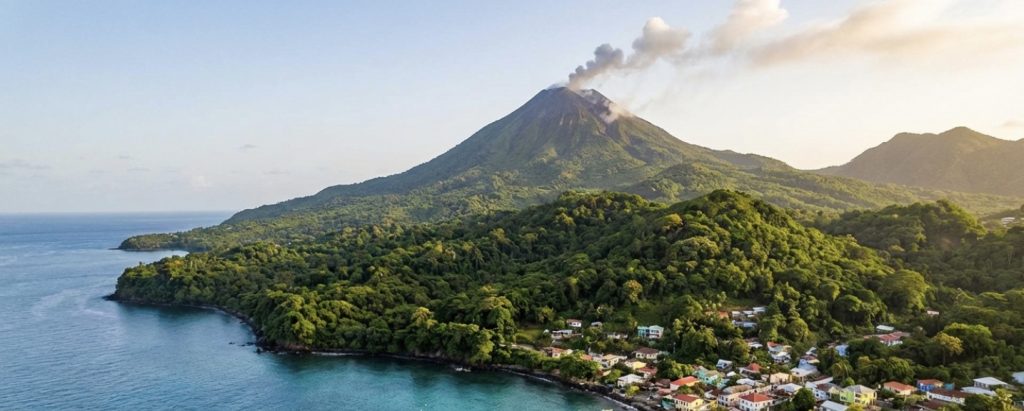
You know that feeling when you look at the lush, mountainous islands of the Eastern Caribbean? You’re probably picturing turquoise waters and soft sand, right? But underneath all that postcard perfection, there’s a powerful, dramatic geological story brewing. It’s pretty intense, isn’t it?
We’re actually talking about Caribbean volcanoes, the fiery architects that built this magnificent island arc. If you live here or travel through these Volcanic Caribbees, understanding these sleeping giants isn’t just interesting, it’s absolutely essential for your awareness.
The truth is, the entire Lesser Antilles chain is home to some seriously active, live volcanoes. These Volcanic islands are constantly being shaped by powerful Volcanic activity, and we need to understand how.
Let’s dive into the science behind why these islands are so volatile and meet the most famous, and potentially dangerous, peaks, from Dominica volcanoes to the famous Kick-’em-Jenny near Grenada.
Why is the Eastern Caribbean So Volcanic?
You know those beautiful islands stretching from Grenada all the way up to places like Anguilla and Sombrero? They actually form one giant geological structure called an Island arc.
This incredible chain exists because of a massive, slow-motion collision happening deep under the Caribbean Sea. It’s the fiery foundation of the entire region!
The Slow Dance of the Tectonic Plates
Don’t worry, I won’t bore you with too much geology! Essentially, the Atlantic Tectonic Plate is slowly but surely sinking right beneath the Caribbean Tectonic Plate.
Geologists call this intense, grinding process subduction. It determines the subduction geometry of the entire region.
When one plate dives under the other, it creates unbelievable heat and pressure deep below the surface. This is what makes the rock melt, turning it into hot, rising magma.
That magma then forces its way up through the crust, creating the dramatic volcanic islands we love. And that’s exactly why earthquakes and volcanoes are so closely linked throughout the Eastern Caribbean.
The Split: Volcanic Caribbees vs. Limestone Caribbees
Did you know the Lesser Antilles actually split into two distinct groups? It’s true! They aren’t all built the same way.
The western side, which includes places like Dominica, St. Vincent, Montserrat, and Martinique, is known as the Volcanic Caribbees.
These islands are still incredibly active today, containing most of the region’s live volcanoes and posing the biggest volcanic hazards.
But if you head further east to islands like Barbados, you find the Limestone Caribbees. Volcanism there died out millions of years ago, replaced by coral and limestone landscapes.
In total, the Lesser Antilles includes about 21 known “live” Caribbean volcanoes spread across 11 volcanically active islands. That’s a lot of potential for future volcanic activity!
Let’s Meet the Giants: Famous Caribbean Volcanoes
When you think about the Eastern Caribbean, you’re really looking at a chain of powerful, Volcanic islands. These aren’t just scenic mountains, they are the architects of history!
We need to talk about some of the biggest players in the Lesser Antilles. Their historical eruptions have completely reshaped culture, economies, and even where people live. It’s a sobering story, but a necessary one to understand the Volcanic Caribbees.
The Tragedy of Montagne Pelée in Martinique
Perhaps the most heartbreaking historical eruption in the region happened in 1902 on the island of Martinique. The eruption of Montagne Pelée is a terrifying reminder of the sheer power these mountains hold.
In May 1902, Montagne Pelée erupted with devastating speed. Can you imagine the horror? It produced a massive, superheated cloud of gas and ash, what scientists call a pyroclastic flow.
This flow absolutely rushed down the mountain and totally destroyed the thriving colonial city of St. Pierre. That catastrophic event resulted in the loss of nearly 30,000 lives in mere minutes.
The St. Pierre destruction taught the world a terrifying lesson about Volcanic hazards. It profoundly changed how we study Volcanic eruptions everywhere.
La Soufrière: St. Vincent’s Fiery Giant
If you mention Caribbean volcanoes today, chances are people immediately think of La Soufrière on St. Vincent. This volcano has a very long history of intense Volcanic activity.
But the most recent series of events in 2021 really brought St. Vincent and the whole region to a complete standstill, didn’t it?
The 2021 event started with non-explosive lava dome growth, but quickly escalated into violent, explosive phases, causing widespread ash fall across the island.
This was a classic example of a major Volcanic eruption that required the mandatory evacuation of thousands of people. It definitely reminds us that La Soufrière remains one of the most monitored peaks in the Lesser Antilles.
The Soufrière Hills Volcano in Montserrat
The small island of Montserrat has suffered immensely because of its resident volcano, the Soufrière Hills Volcano. This thing began a massive eruptive period back in 1995, and the Volcanic activity continued for years, changing the island forever.
The relentless eruptions led to the burial and abandonment of the island’s capital, Plymouth. It was a terrible humanitarian crisis that showed how long-term Volcanic hazards can displace entire populations.
Even today, large parts of Montserrat remain an exclusion zone. They are guarded strictly against the continuing dangers posed by the Soufrière Hills Volcano.
Dominica: Home to Many Live Volcanoes
Now, if you want to talk about volcanic richness, you absolutely must talk about Dominica. This island is the extreme example of Volcanic Caribbees concentration.
Did you know that Dominica volcanoes are numerous, featuring no less than nine “live” volcanic centers? That’s incredible!
This high concentration is exactly why Dominica is so famous for its geothermal wonders, like the incredible Boiling Lake and countless hot springs.
While many of these centers are currently dormant, the sheer number of Volcanic islands here means that Dominica is constantly monitored for signs of renewed Volcanic activity. We can’t afford to look away!
The Silent Architects: Hidden Submarine Volcanoes
You might think you’ve seen all the drama when looking at the mighty peaks of the Eastern Caribbean.
But hey, did you know not all Caribbean volcanoes tower over the sea? Some of the scariest ones are actually hiding beneath the waves, adding a whole new dimension to volcanic hazards in the Lesser Antilles.
These are the hidden threats, the powerful forces you don’t often hear about, but they are absolutely critical to the geology of the region.
Kick-’em-Jenny: The Underwater Giant near Grenada
Let’s talk about the most famous of these underwater giants: Kick-’em-Jenny. This massive submarine volcano is incredibly active, and it lurks just north of beautiful Grenada.
Can you believe one of the most dynamic live volcanoes in the region doesn’t even have a beach? It’s constantly rumbling away beneath the Caribbean Sea.
The name is funny, right? It supposedly refers to the rough waters it causes above its summit. But its volcanic activity is no joke.
Scientists are constantly tracking its every move, monitoring seismic signals and depth because its summit is always shifting.
If Kick-’em-Jenny has a major volcanic eruption, it could trigger huge underwater landslides or even generate tsunamis, which is a serious concern for the entire island arc.
That’s why this Grenada volcano is such a crucial focus point for emergency planning across the Volcanic Caribbees.
Comparing Key Active Volcanoes in the Volcanic Caribbees
Okay, so we’ve talked about the hidden dangers beneath the waves, like those sneaky submarine volcanoes. But what about the famous, towering peaks? These are the ones that really define the stunning scenery of the Eastern Caribbean.
You might not realize it, but nearly every island in the western Lesser Antilles is essentially a volcanic island. This whole chain is a powerful island arc formed by tectonic forces!
It’s important to know the major players and the specific volcanic hazards they present. Let’s take a look at the most prominent live volcanoes in the region.
| Volcano Name | Island/Location (Critical Entity) | Type of Hazard | Notable Recent Activity |
|---|---|---|---|
| La Soufrière | St. Vincent | Explosive eruptions, ash fall, pyroclastic flows | Major explosive eruption in 2021 |
| Montagne Pelée | Martinique | Pyroclastic flows, dome collapse | Devastating eruption in 1902 (led to the St. Pierre destruction) |
| Soufrière Hills Volcano | Montserrat | Dome growth, pyroclastic flows, ash fall | Active period started 1995, destroyed Plymouth |
| Kick-’em-Jenny | Near Grenada (Submarine) | Tsunamis, underwater explosions | Frequent seismic unrest and minor activity (2017, 2015) |
| Soufrière Guadeloupe | Guadeloupe | Phreatic eruption potential, seismic swarms | Significant phreatic activity in 1976 |
Isn’t that an intense list? You can clearly see the variety of volcanic activity we manage in the Volcanic Caribbees.
The history here is sobering. Just look at the tragic past of Montagne Pelée in Martinique and the ongoing threat from the Soufrière Hills Volcano in Montserrat. This is why monitoring the Lesser Antilles is so critical!
And don’t forget Kick-’em-Jenny, the most active submarine volcano near Grenada. It really drives home the reality that we are living on a dynamic, fiery island arc.
Living on the Edge: Understanding Caribbean Volcanic Hazards
Living among these beautiful, powerful peaks means we have to understand the risks. When you think of a volcanic eruption, you probably picture slow, flowing lava. But that’s usually not the danger in the Lesser Antilles!
Because the magma beneath our volcanic islands is thick and sticky, we worry about much worse things. The real volcanic hazards here in the Eastern Caribbean often involve explosive power, which defines this active island arc.
You might not realize it, but these dangers are far more destructive than lava flows. Here are the main threats posed by our live volcanoes:
- Pyroclastic Flows: These are the nightmares. Fast-moving clouds of superheated gas and rock that incinerate everything in their path. They’re the most dangerous volcanic hazards and were responsible for the complete St. Pierre destruction when Montagne Pelée erupted on Martinique.
- Ash Fall: You might think ash is just messy, but heavy ash fall can seriously damage infrastructure, clog engines, and pose major health risks. If it gets too heavy, it can even collapse roofs!
- Lahars: Think of these as volcanic mudflows. They happen when heavy rainfall mixes with loose ash and debris, often after a major volcanic eruption has ended. Lahars rush down valleys, making them sneaky and incredibly destructive.
- Phreatic Eruptions: Sometimes, steam is the culprit! A phreatic eruption is a steam-driven explosion, often occurring without new magma reaching the surface. Don’t underestimate them, though, they are highly dangerous due to the flying debris.
That’s why governments across the Eastern Caribbean, especially in places like Dominica, St. Kitts, Nevis, Saba, and Montserrat, don’t mess around. They work closely with the Seismic Research Centre to monitor every tiny tremor and puff of steam, looking for signs of increased volcanic activity.
If you live on or visit these stunning islands, you absolutely must pay attention to local advisories and evacuation plans. We can’t stop the geology, but we can definitely prepare for it! That’s the key to living safely near these powerful peaks.
Monitoring the Heat: What’s Next for the Volcanic Caribbees?
So, does this mean we should all worry constantly about the next big eruption? Of course not! Living among the powerful peaks of the Eastern Caribbean means we have to stay informed, and monitoring is constant.
The movement that built this stunning region, where the Caribbean Sea floor is slowly subducting beneath the Lesser Antilles, isn’t stopping. That means the pressure fueling this incredible Island arc is always there.
We can definitely expect continued periods of unrest, especially from our most famous live volcanoes. Think about places like La Soufrière in St. Vincent or the volatile submarine volcano, Kick-’em-Jenny, near Grenada.
But remember, the vast majority of seismic events and minor volcanic activity don’t lead to devastating volcanic eruptions. These islands are resilient, and we have dedicated scientists watching every tremor.
It’s important to realize that the sheer beauty of the region is a direct result of this powerful geology. You wouldn’t have the lush peaks of the Guadeloupe volcano or the incredible geothermal springs of Dominica without this intense heat below.
It’s the ultimate trade-off, isn’t it? We get paradise, but we also live with these amazing, sometimes terrifying, natural wonders. Understanding the Volcanic Caribbees and their potential volcanic hazards is key to truly appreciating this unique part of the world.
Whether you’re looking at the steaming vents of Montserrat or the fertile slopes of Martinique, you’re seeing the earth actively sculpting the landscape. And that, I think, is pretty spectacular.
Frequently Asked Questions About Caribbean Volcanoes
Living among these incredible mountains means you probably have a lot of questions about the risk. It’s natural to wonder about the biggest threats and the history hidden beneath the surface, right?
How many Caribbean volcanoes are truly ‘live’?
You might be wondering just how many live volcanoes we have in the Eastern Caribbean. Well, the entire Lesser Antilles chain is part of this huge Island arc created by plate collision.
We’re mainly focused on the active western line, often called the Volcanic Caribbees. There are about 19 potentially active centers stretching from Grenada right up to Saba.
That means there’s a lot of potential volcanic activity being tracked by scientists! But don’t worry, they aren’t all erupting at once.
Which islands face the highest volcanic hazards?
When we talk about volcanic hazards, islands with a history of big volcanic eruptions naturally come up. St. Vincent is home to La Soufrière, which erupted dramatically in 2021, reminding everyone of the power beneath us.
And who could forget the ongoing activity at the Montserrat volcano? The Soufrière Hills Volcano has really changed the landscape there.
Then there’s Martinique with the infamous Montagne Pelée, and places like Dominica and Guadeloupe volcano also have highly monitored centers. These islands require constant vigilance, but scientists are always watching.
What was the worst historical eruption in the Caribbean?
That tragic title sadly belongs to the 1902 eruption of Montagne Pelée in Martinique. It was a terrifying event that resulted in the complete St. Pierre destruction.
Almost everyone in the city of St. Pierre perished instantly due to a devastating pyroclastic flow. It remains one of the most deadly historical eruptions globally, showing just how powerful Caribbean volcanoes can be when they unleash a violent eruption involving new magma.
Is there a submarine volcano in the Eastern Caribbean?
Yes, and it’s one of the coolest ones! We have Kick-’em-Jenny, a famous submarine volcano located just north of Grenada in the Caribbean Sea.
It’s regularly monitored because its volcanic activity can certainly cause issues, especially if it continues to grow and breaks the surface. It shows you that the Eastern Caribbean is truly bubbling, even beneath the waves!
How many live volcanoes are in the Caribbean?
You asked how many live volcanoes we’re actually dealing with, and the number might surprise you! Across the entire Eastern Caribbean, running along the Lesser Antilles chain, we’ve got roughly 21 known, active Caribbean volcanoes.
That seems like a lot, doesn’t it? These powerful volcanic islands are all part of one massive Island arc, and they are spread across 11 different nations in the region.
The islands with the most intense volcanic activity include Dominica, which has nine systems, as well as St. Vincent (home to La Soufrière) and Montserrat (with the active Soufrière Hills Volcano).
But the list doesn’t stop there! You can also find active systems in places like Guadeloupe, Martinique (site of the devastating Montagne Pelée), and down to Grenada.
And let’s not forget the famous underwater threat, Kick-’em-Jenny, which is a very active Submarine volcano just north of Grenada! It really shows you the constant geological forces at work beneath the Caribbean Sea.
Which of these Caribbean Volcanoes is the Most Dangerous?
That’s a fantastic question, and honestly, it’s a tough one to answer! When you ask about the most dangerous volcano in the Eastern Caribbean, we have to look at both historical impact and current volcanic activity. It really depends on how many people live nearby and the specific eruption style, don’t you think?
Historically, the deadliest event was definitely Montagne Pelée in Martinique. That terrifying 1902 eruption caused the devastating St. Pierre destruction, wiping out nearly everyone in the city. It’s a painful reminder of the power held by these Volcanic Caribbees.
But today, across the Lesser Antilles, experts are keeping a very close eye on two main spots. You can’t ignore La Soufrière on St. Vincent, especially after its highly explosive 2021 eruption.
And then there’s Kick-’em-Jenny, the active submarine volcano near Grenada. Because this Grenada volcano is constantly rumbling and showing frequent volcanic activity beneath the Caribbean Sea, it’s considered a serious volcanic hazard that requires constant monitoring.
So while Montagne Pelée holds the historical title, La Soufrière and Kick-’em-Jenny are the ones keeping scientists up at night right now.
Are islands like St. Kitts and Nevis volcanically active?
Oh, absolutely! When you gaze at the amazing chain of volcanic islands that make up the Eastern Caribbean, islands like St. Kitts and Nevis are right in the thick of it.
They are key parts of the active western chain of the Lesser Antilles, often nicknamed the Volcanic Caribbees. These islands were literally built by fire!
St. Kitts is home to the impressive Mount Liamuiga, and over on Nevis, you have Nevis Peak. While they haven’t had major historical eruptions recently, don’t let that fool you.
These majestic mountains are definitely classified as live volcanoes, meaning the volcanic activity is ongoing, even if it’s just quiet rumbling deep inside. That’s why scientists monitor them closely, just like they watch La Soufrière in St. Vincent or the volcanoes in Guadeloupe and Dominica.
You can’t have the beauty of the Caribbean Sea without the power of these volcanoes shaping the land, can you?
So, what’s the difference between a steam blast and a fiery explosion?
You might hear geologists talking about a phreatic eruption. Don’t worry, it isn’t as complicated as it sounds! This is basically a massive, steam-driven volcanic explosion.
It happens when magma deep underground heats up groundwater or surface water incredibly fast, turning it instantly into violent steam. It’s like a giant pressure cooker blowing its lid, often tossing around old rock but without any fresh, new magma involved.
A magmatic eruption is a whole different story. This is the real fiery deal, involving the actual ascent and explosion of new molten rock coming straight from the Earth’s interior.
When you hear about devastating volcanic eruptions in the Eastern Caribbean, they are often magmatic. Think about the catastrophic pyroclastic flows that destroyed the city of St. Pierre during the 1902 eruption of Montagne Pelée in Martinique. That kind of intense volcanic activity involves new magma, and it’s why monitoring these live volcanoes is absolutely critical.